
Discover Sumatra’s Hidden Rainforest Paradise Batu Katak
Discover Sumatra’s Hidden Rainforest Paradise Batu Katak
Explore mysterious limestone caves, lush rainforest, rare giant flowers, wild gibbons, peaceful rivers, and authentic village life in one of North Sumatra’s most fascinating ecotourism destinations.
Tucked away in the green landscapes of Langkat Regency, North Sumatra, Batu Katak is a small nature destination on the edge of Gunung Leuser National Park. Surrounded by tropical rainforest, distinctive limestone formations, and the beautiful Berkail River, this quiet village offers a different kind of Sumatra adventure—one that combines wildlife observation, cave exploration, botanical discoveries, and community-based tourism.
While nearby Bukit Lawang is widely known for orangutan trekking, Batu Katak offers a more specialised experience for travellers interested in karst landscapes, forest trails, natural caves, gibbons, and the remarkable giant flowers found in the region. The area is also recognised by Indonesia’s Gunung Leuser National Park authority as a destination for exploring karst terrain, caves, wildlife, and unusual plant life.
Batu Katak is particularly appealing to nature lovers who want to slow down, explore with local guides, and discover a quieter side of North Sumatra. Whether you visit for a day trip or stay overnight beside the river, the destination offers an opportunity to experience the rainforest beyond the usual tourist routes.
Where is Batu Katak?
Batu Katak is situated in Batu Jongjong Village, Bohorok District, Langkat Regency, North Sumatra, Indonesia, near the boundary of Gunung Leuser National Park. The village lies beside the Berkail River and is known for the combination of rainforest, karst forest, limestone caves, and wildlife habitat.
The destination is within reach of Bukit Lawang, making it an attractive addition to a wider North Sumatra itinerary. Travellers can combine the two locations to experience different rainforest environments and activities.
Batu Katak is especially suitable for visitors who enjoy:
-
Guided jungle trekking and wildlife observation.
-
Limestone landscapes and cave exploration.
-
Looking for rare Rafflesia and giant Amorphophallus flowers.
-
Observing gibbons and siamangs in their natural habitat.
-
Relaxing beside a tropical river.
-
Learning about local village life and community-based ecotourism.
-
Staying in simple guesthouses surrounded by nature.
The village is less developed than a major tourist centre. This is part of its appeal, but visitors should plan transport, accommodation, guides, and activities in advance
Why visit Batu Katak?
Discover a remarkable karst landscape: Explore unusual limestone formations, forest-covered hills, and natural cave systems that make Batu Katak distinctive within the wider Leuser region.
Search for extraordinary giant flowers: Join a botanical walk to look for Rafflesia or giant Amorphophallus plants. These remarkable flowers have highly unusual life cycles, and blooms are not present throughout the year.
Listen for gibbons and siamangs: Experience the sounds of the rainforest and look for wild primates moving through the canopy with a knowledgeable local guide.
Explore natural caves: Discover limestone formations and cave environments on guided outings, where access and conditions allow.
Enjoy peaceful river scenery: Relax beside the Berkail River, take photographs, and enjoy a refreshing break in a beautiful natural setting when water conditions are safe.
Explore the karst forest and limestone formations
One of Batu Katak’s defining features is its karst landscape, formed primarily from limestone shaped over long periods by water and natural erosion. The result is a distinctive environment of rock outcrops, steep limestone faces, caves, and forested slopes.
The mixture of limestone terrain and tropical vegetation creates a fascinating setting for nature walks. As you explore, a local guide can help explain the landscape, identify plants, and describe how the forest and geology shape the area’s habitats.
What makes the landscape special?
-
Limestone cliffs and unusual rock formations.
-
Forest growing around rocky slopes and karst terrain.
-
Natural caves and underground water features.
-
Streams and small waterways that shape the landscape.
-
Habitat for a variety of plants, birds, and mammals.
The trails may be uneven, muddy, steep, or slippery, especially after rain. A guided visit is recommended because routes and cave access conditions can vary.
Batu Katak’s karst area is an important part of its identity as a nature destination and offers a different experience from the more familiar river and orangutan trekking areas around Bukit Lawang
Explore the mysterious water caves of Batu Katak
Cave exploration is one of the most distinctive experiences available in Batu Katak. The surrounding karst landscape contains natural caves and underground water features that give visitors a glimpse into a different side of Sumatra’s natural environment.
On a guided cave excursion, you may walk through forest trails, follow a stream towards a cave entrance, and explore limestone formations in a dark, enclosed environment. Some routes involve walking through shallow water, uneven rock, and slippery passages.
What can you expect?
Depending on the selected cave and current conditions, a guided experience may include:
-
Walking through tropical vegetation towards the cave.
-
Learning about limestone formations and the karst landscape.
-
Observing stalactites, rock formations, and cave habitats where present.
-
Listening for bats and noticing other cave-dwelling creatures.
-
Following a stream or shallow water through accessible sections.
-
Returning to the village along a forest trail.
Cave visits should always be arranged with a guide familiar with the particular route. Do not enter caves alone, and never continue into flooded passages or unstable sections.
What to bring for cave exploration
-
A reliable headlamp and spare batteries.
-
Shoes with good grip that are suitable for wet ground.
-
Quick-drying clothing.
-
A waterproof bag for your phone and camera.
-
Drinking water and basic personal supplies.
Ask your guide whether protective equipment is supplied and whether the route is suitable for your age, mobility, and experience.
Explore the mysterious water caves of Batu Katak
Cave exploration is one of the most distinctive experiences available in Batu Katak. The surrounding karst landscape contains natural caves and underground water features that give visitors a glimpse into a different side of Sumatra’s natural environment.
On a guided cave excursion, you may walk through forest trails, follow a stream towards a cave entrance, and explore limestone formations in a dark, enclosed environment. Some routes involve walking through shallow water, uneven rock, and slippery passages.
What can you expect?
Depending on the selected cave and current conditions, a guided experience may include:
-
Walking through tropical vegetation towards the cave.
-
Learning about limestone formations and the karst landscape.
-
Observing stalactites, rock formations, and cave habitats where present.
-
Listening for bats and noticing other cave-dwelling creatures.
-
Following a stream or shallow water through accessible sections.
-
Returning to the village along a forest trail.
Cave visits should always be arranged with a guide familiar with the particular route. Do not enter caves alone, and never continue into flooded passages or unstable sections.
What to bring for cave exploration
-
A reliable headlamp and spare batteries.
-
Shoes with good grip that are suitable for wet ground.
-
Quick-drying clothing.
-
A waterproof bag for your phone and camera.
-
Drinking water and basic personal supplies.
Ask your guide whether protective equipment is supplied and whether the route is suitable for your age, mobility, and experience.
Search for the world’s most extraordinary flowers
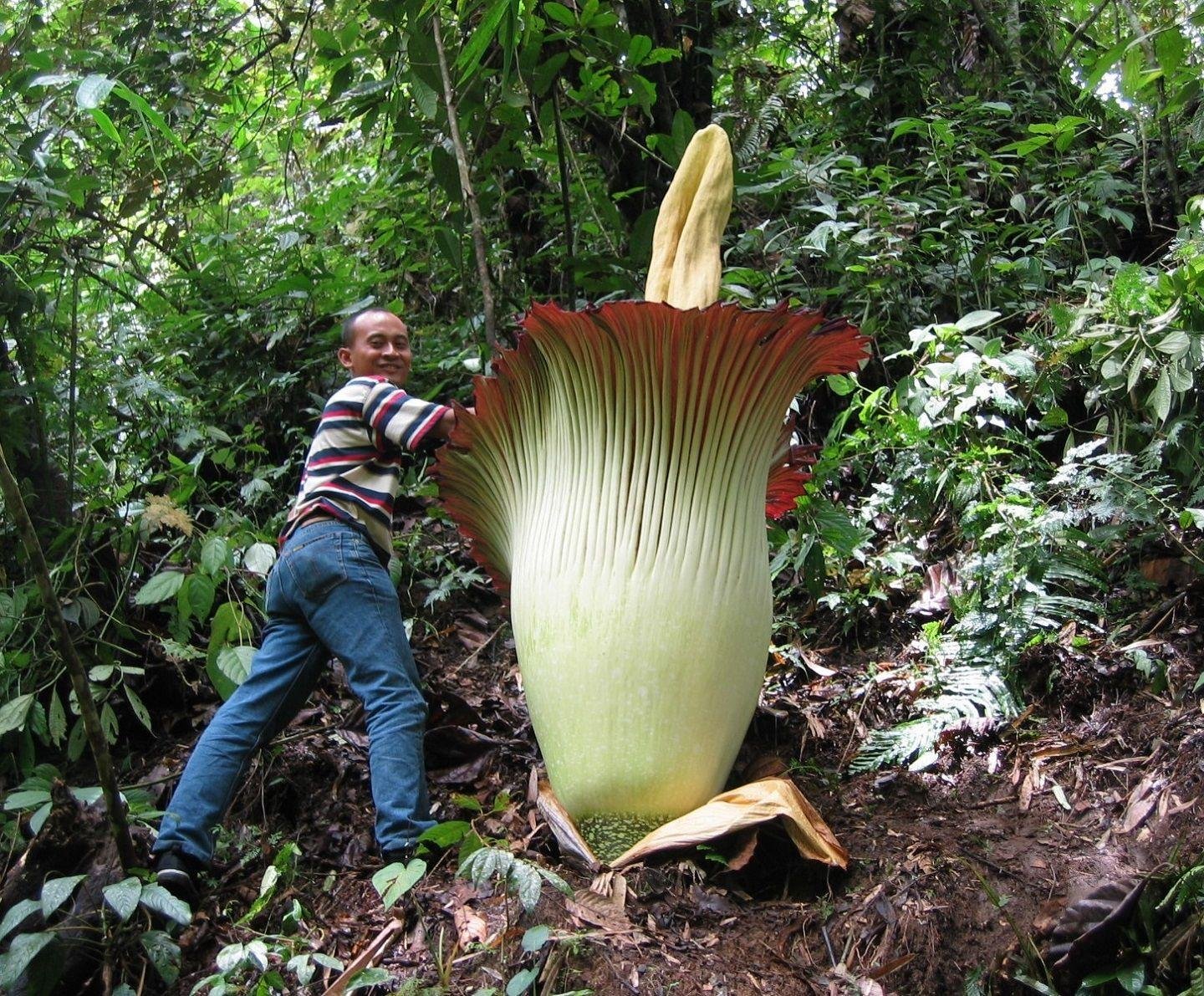
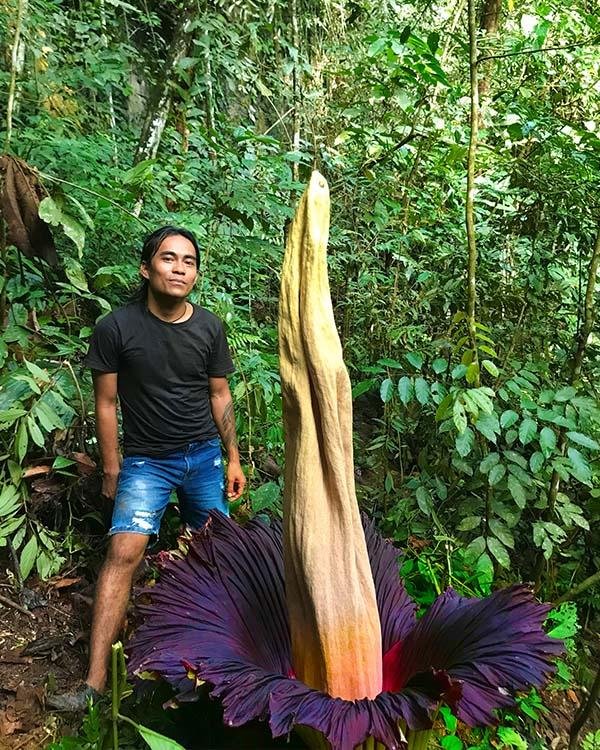
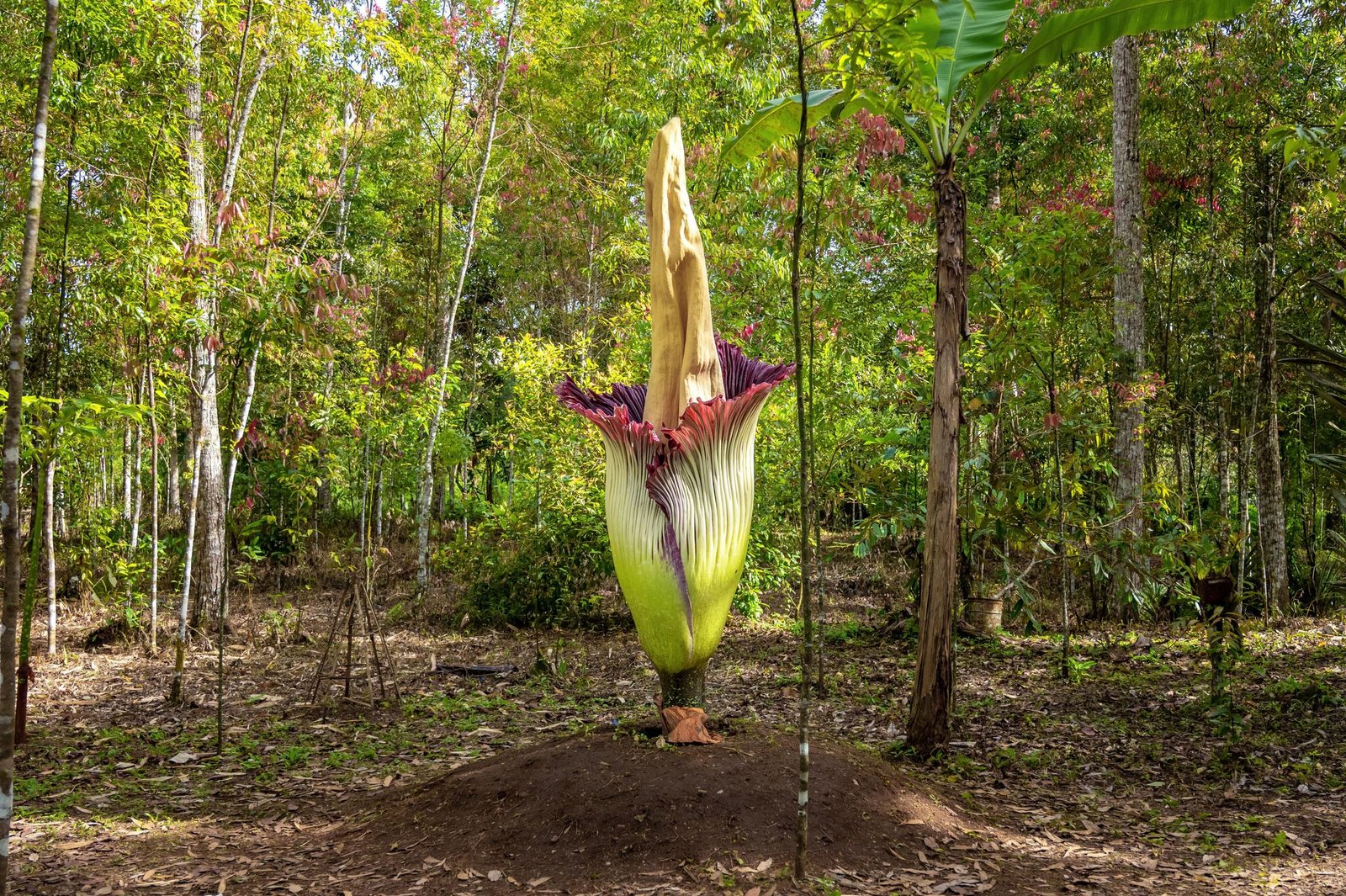
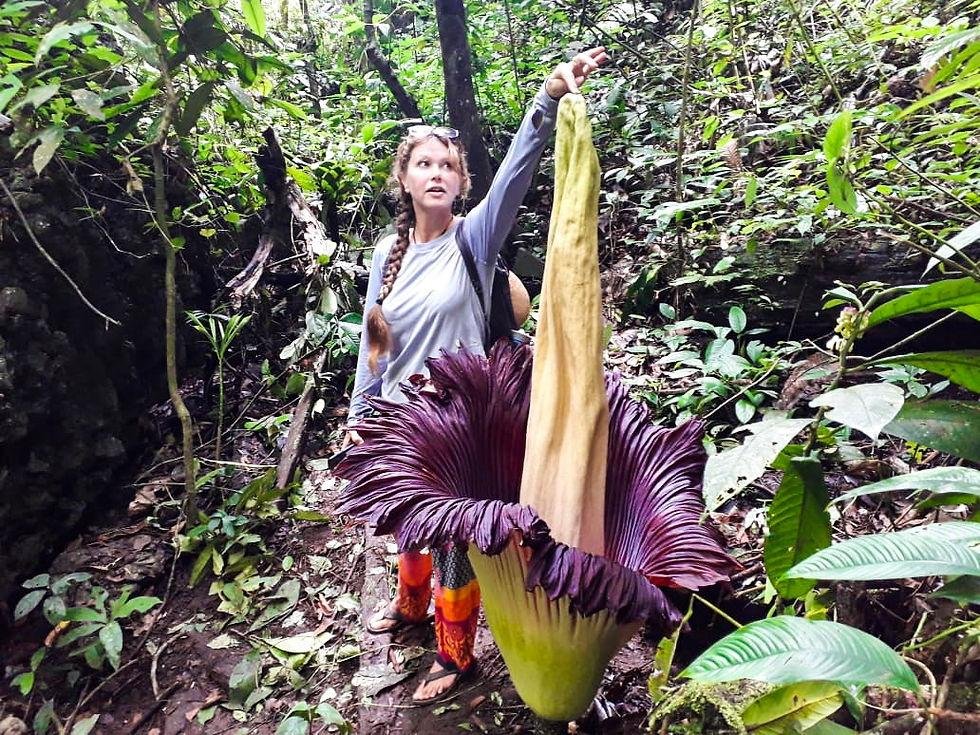
Batu Katak is particularly interesting for botanical enthusiasts because the wider area is known for remarkable flowering plants, including Rafflesia and Amorphophallus titanum, commonly associated with the giant or corpse flower.
These plants are famous for their unusual size, distinctive appearance, and uncommon flowering events. Seeing one in bloom can be a special highlight of a rainforest visit, but it requires good timing and a little luck.
Rafflesia: A remarkable parasitic flower
Rafflesia is a group of unusual flowering plants that live as parasites inside host vines. Some species produce enormous flowers, often with reddish petals and pale markings. Their blooms may last only a few days, making them difficult to see at the right moment.
Amorphophallus titanum: The giant inflorescence
Amorphophallus titanum produces one of the largest unbranched flowering structures in the plant kingdom. Its dramatic flowering event is brief relative to the plant’s long growth cycle, and it is well known for its strong odour during bloom.
Although these plants are often discussed together, they are biologically different: Rafflesia produces a single giant flower, while Amorphophallus titanum produces a large flowering structure called an inflorescence.
Jungle trekking in Batu Katak
Jungle trekking is one of the best ways to experience Batu Katak’s rich natural environment. Unlike a visit focused only on one attraction, a guided forest walk allows you to appreciate the connection between the karst landscape, rainforest vegetation, and wildlife.
Local guides can help identify animal calls, explain unusual plants, and point out signs of wildlife that might otherwise go unnoticed.
What might you encounter?
Depending on the trail, weather, season, and luck, you may have opportunities to observe:
-
Gibbons and siamangs calling from the canopy.
-
Wild orangutans in suitable habitat.
-
Birds, butterflies, and other insects.
-
Tropical plants and unusual flowering species.
-
Animal tracks and other signs of wildlife.
-
Limestone cliffs, streams, and forest scenery.
Wildlife sightings are never guaranteed. Animals may remain hidden, move through the canopy, or avoid people. A good guide will never chase, feed, or disturb wildlife to create a closer encounter.